

Description
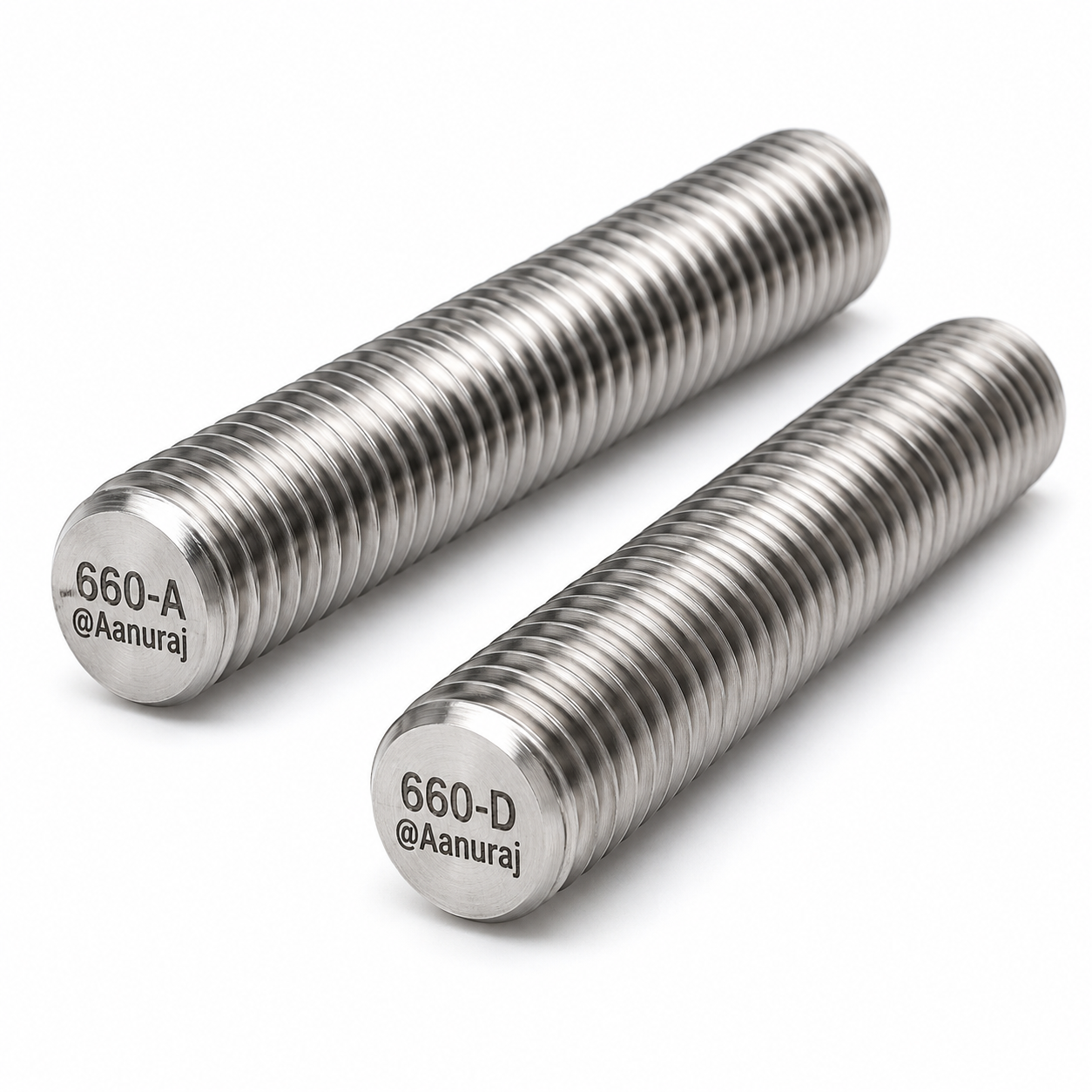
ASTM A453 Grade 660 Studs
UNS S66286 | Alloy A-286 | Classes A, B, C & D
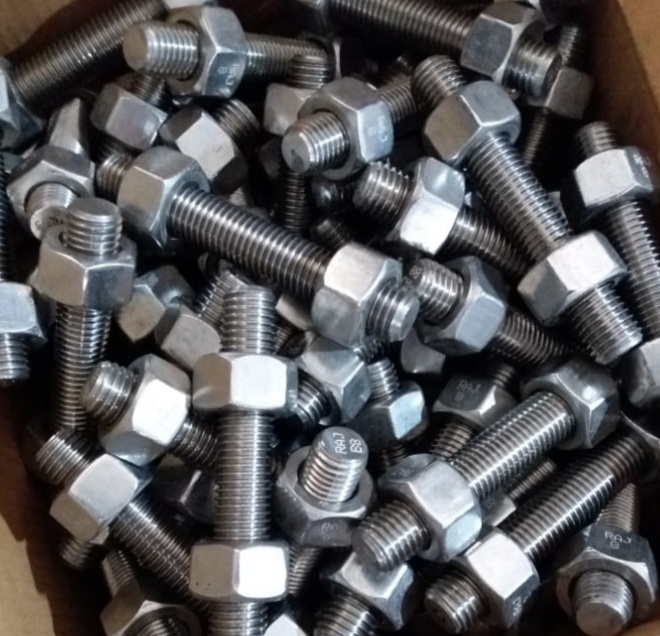
High-temperature studs for pressure vessels, valve flanges, power generation, petrochemical equipment and other engineered bolting applications.
ASTM A453 Grade 660 - Technical Overview
ASTM A453/A453M Grade 660 is a high-temperature bolting grade covering Classes A, B, C and D. The specification covers bolting components including studs and stud bolts for applications such as pressure vessels and valve flanges. Grade 660 is associated with UNS S66286 / Alloy A-286 and uses controlled solution treatment and precipitation-aging to obtain the specified properties.
Key Features
Chemical Composition - Grade 660
| Element | Composition, wt. % |
|---|---|
| Carbon (C) | 0.08 max |
| Manganese (Mn) | 2.00 max |
| Silicon (Si) | 1.00 max |
| Phosphorus (P) | 0.040 max |
| Sulfur (S) | 0.030 max |
| Chromium (Cr) | 13.50 - 16.00 |
| Nickel (Ni) | 24.00 - 27.00 |
| Molybdenum (Mo) | 1.00 - 1.50 |
| Titanium (Ti) | 1.90 - 2.35 |
| Vanadium (V) | 0.10 - 0.50 |
| Aluminium (Al) | 0.35 max |
| Boron (B) | 0.001 - 0.010 |
| Iron (Fe) | Balance |
Physical Properties - A-286 Reference Data
| Property | Typical / reference value |
|---|---|
| Density | 7.92 g/cm3 |
| Melting range | 1370 - 1430 °C (2500 - 2610 °F) |
| Modulus of elasticity | Approximately 199 - 201 GPa at room temperature |
| Shear modulus | Approximately 77 GPa |
| Poisson ratio | Approximately 0.30 |
| Thermal conductivity | Approximately 15.1 W/m·K at 150 °C |
| Specific heat | Approximately 420 J/kg·K |
| Thermal expansion | Approximately 16.5 × 10⁻⁶ / °C over 20 - 100 °C; increases with temperature |
| Magnetic permeability | Approximately 1.01 in solution-treated reference condition |
Physical properties are reference values and are not a substitute for the governing product specification or purchaser requirements.
Mechanical Properties - ASTM A453 Grade 660
| Class | Tensile strength, min. | Yield strength, min. | Elongation, min. | Reduction of area, min. |
|---|---|---|---|---|
| A | 130 ksi (895 MPa) | 85 ksi (585 MPa) | 15 % | 18 % |
| B | 130 ksi (895 MPa) | 85 ksi (585 MPa) | 15 % | 18 % |
| C | 130 ksi (895 MPa) | 85 ksi (585 MPa) | 15 % | 18 % |
| D | 130 ksi (895 MPa) | 105 ksi (725 MPa) | 15 % | 18 % |
Solution Treatment, Quenching & Age Hardening
| Class | Solution treatment | Quench | Age / hardening treatment |
|---|---|---|---|
| A | 1650 ± 25 °F (900 ± 14 °C), hold 2 h minimum | Liquid | 1325 ± 25 °F (720 ± 14 °C), hold 16 h, air cool |
| B | 1800 ± 25 °F (980 ± 14 °C), hold 1 h minimum | Liquid | 1325 ± 25 °F (720 ± 14 °C), hold 16 h, air cool |
| C | 1800 ± 25 °F (980 ± 14 °C), hold 1 h minimum | Oil | 1425 ± 25 °F (775 ± 14 °C), hold 16 h, air cool; followed by 1200 ± 25 °F (650 ± 14 °C), hold 16 h, air cool |
| D | 1650 ± 25 °F (900 ± 14 °C), hold 2 h minimum, liquid quench OR 1800 ± 25 °F (980 ± 14 °C), hold 1 h minimum, liquid quench | Liquid | 1325 ± 25 °F (720 ± 14 °C), hold 16 h, air cool; second age at 1200 ± 25 °F (650 ± 14 °C), hold 16 h, air cool if required to achieve properties |
Class A vs Class B vs Class C vs Class D
Solution: 1650 ± 25 °F (900 ± 14 °C), liquid quench.
Age: 1325 ± 25 °F (720 ± 14 °C), 16 h, air cool.
Minimum yield strength: 85 ksi (585 MPa).
Solution: 1800 ± 25 °F (980 ± 14 °C), liquid quench.
Age: 1325 ± 25 °F (720 ± 14 °C), 16 h, air cool.
Minimum yield strength: 85 ksi (585 MPa).
Solution: 1800 ± 25 °F (980 ± 14 °C), oil quench.
Age: 1425 ± 25 °F (775 ± 14 °C), then 1200 ± 25 °F (650 ± 14 °C).
Minimum yield strength: 85 ksi (585 MPa).
Solution: 1650 °F or 1800 °F route with liquid quench.
Age: 1325 ± 25 °F (720 ± 14 °C); second 1200 ± 25 °F (650 ± 14 °C) age if required to achieve properties.
Minimum yield strength: 105 ksi (725 MPa).
What Is a Stress-Rupture Test?
A stress-rupture test holds a specimen at a specified elevated temperature and tensile stress until rupture. It evaluates long-duration load-carrying performance at temperature rather than only short-time tensile strength.
Why is it important for Grade 660 studs?
High-temperature flange and pressure-vessel joints can remain under tensile preload for long periods. Stress-rupture testing provides a specific measure of resistance to time-dependent rupture under the prescribed test conditions. ASTM A453 includes stress-rupture testing among the required test categories for applicable Grade 660 material.
| Grade 660 class | Stress-rupture test temperature | Minimum stress | Minimum time | Minimum elongation |
|---|---|---|---|---|
| A, B and C | 1200 °F (650 °C) | 56 ksi (385 MPa) | 100 h | 5 % |
| D | NR under the cited Grade 660 requirement | - | - | - |
Typical Applications
Why Aanuraj Fasteners?
Aanuraj Fasteners specialises in technically specified stainless and high-nickel fasteners, including threaded studs and engineered bolting. For an ASTM A453 Grade 660 enquiry, provide the class, diameter, length, thread specification, quantity, heat-treatment requirement and inspection or documentation requirement so the supply can be matched to the intended service.
Technical Enquiry
For Grade 660 studs, send the required class, size, length, thread, quantity and service temperature. You can also send your drawing or BOQ for quotation.
PDF: After uploading the Grade 660 technical PDF to WordPress Media Library, replace the PDF button/link with the actual WordPress Media URL. This avoids the download problem caused by embedded or relative PDF files.
Technical reference note: ASTM A453/A453M is the governing bolting specification. The current ASTM listing is A453/A453M-26. The numerical tables above follow the Grade 660 requirements reflected in the referenced A453/A453M material and should be checked against the exact edition specified in the purchase order and the applicable MTC before acceptance.


Reviews
There are no reviews yet.