

Description
“Unlocking Hydrogen Embrittlement: Securing Fastener Threads”
Hydrogen Embrittlement in Metal Materials: Causes and Prevention
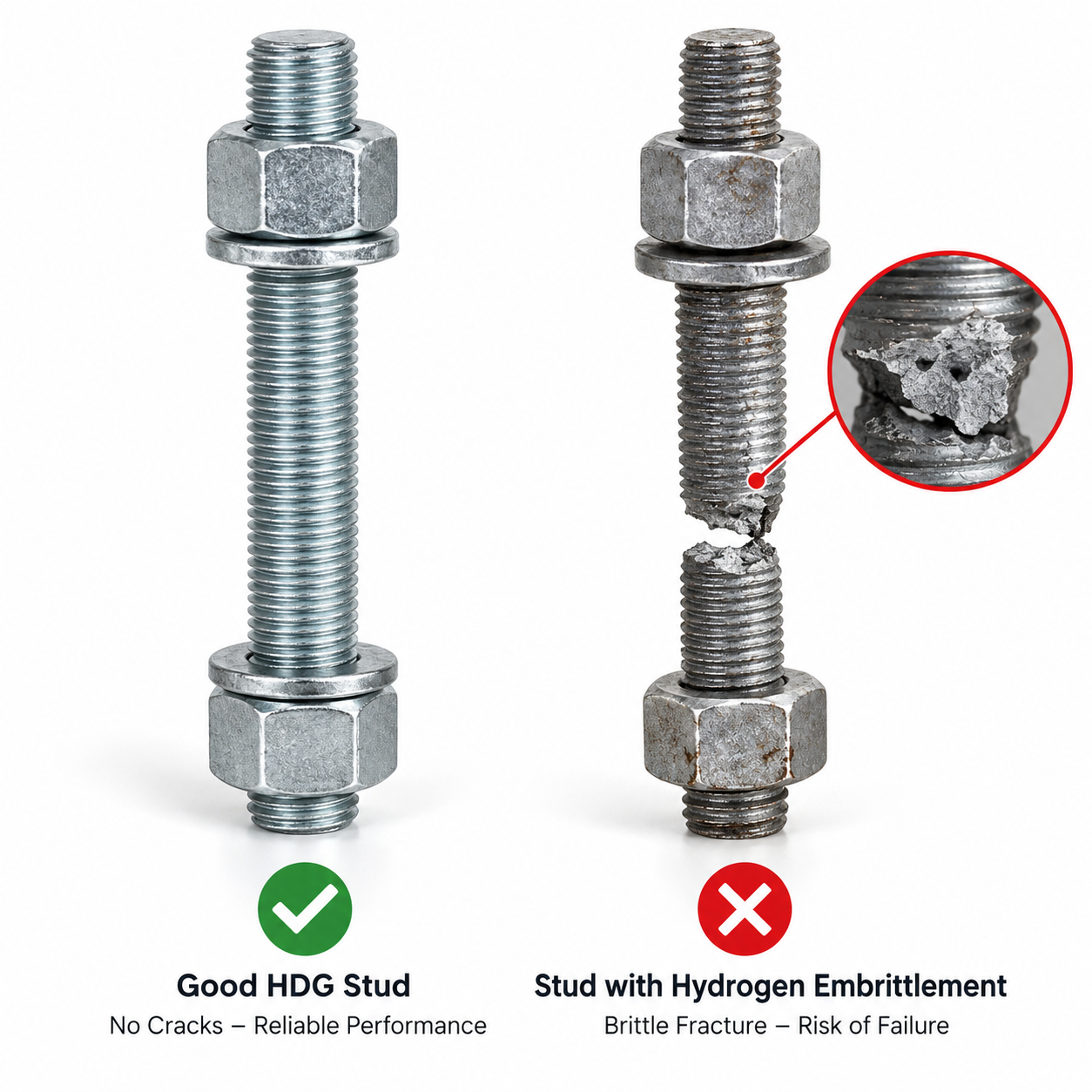
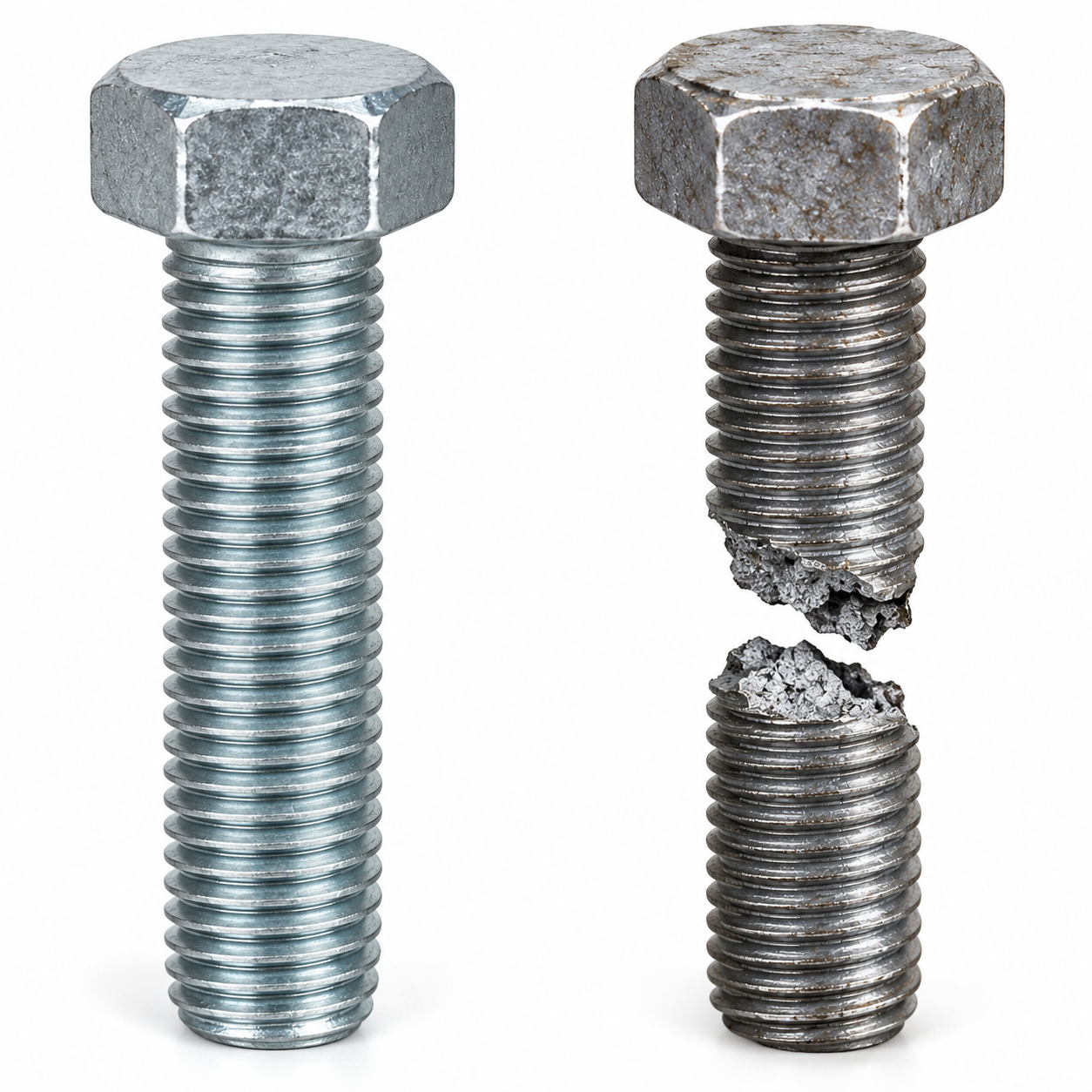
Hydrogen embrittlement can affect metal materials used in demanding industrial applications. It can reduce the ductility and strength of metals. As a result, affected components may develop cracks or fail under stress.
This issue deserves particular attention when manufacturers produce hot-dip galvanized studs, bolts and nuts. Hydrogen can enter metal during processes such as pickling, cleaning and electroplating. Therefore, manufacturers must control these processes carefully.
What Is Hydrogen Embrittlement?
Hydrogen embrittlement occurs when hydrogen enters a metal and reduces its ability to withstand stress. The absorbed hydrogen can move through the metal structure and collect at areas that already have high stress.
High-strength steels generally have a higher susceptibility to this problem. However, the risk depends on the material, manufacturing process, stress level and environment.
Hydrogen embrittlement can remain difficult to detect during normal inspection. A fastener may appear visually acceptable while its mechanical performance has already been affected.
Causes of Hydrogen Embrittlement
Several factors can introduce hydrogen into metal fasteners.
1. Hydrogen Absorption
Manufacturing processes can introduce hydrogen into steel. Pickling, acid cleaning and electroplating are common sources.
During these processes, hydrogen can enter the metal surface. Some of this hydrogen may then diffuse into the material.
2. High Material Strength
High-strength steels require particular attention. Their microstructure can make them more susceptible to hydrogen-assisted cracking.
Therefore, manufacturers should consider both fastener strength and hydrogen embrittlement risk during material selection.
3. Residual and Applied Stress
Stress increases the risk of hydrogen-assisted cracking. Residual stress can remain after manufacturing, heat treatment or forming.
Applied loads can add further stress during service. Consequently, highly stressed fasteners require careful process control and inspection.
4. Manufacturing Environment
Acid cleaning, electroplating and other surface treatments can increase hydrogen exposure.
Proper process control helps reduce hydrogen absorption. Manufacturers should also follow suitable industry specifications for critical fasteners.
Hydrogen Embrittlement in Galvanized Fasteners
Hot-dip galvanized studs, bolts and nuts require careful manufacturing control. The galvanizing process provides corrosion protection, but hydrogen-related risks can arise from pre-treatment operations.
Pickling and acid cleaning can expose steel to hydrogen. The risk becomes more important with high-strength fasteners.
Therefore, manufacturers should evaluate the fastener grade, surface preparation, processing time and post-treatment requirements.
How to Prevent Hydrogen Embrittlement
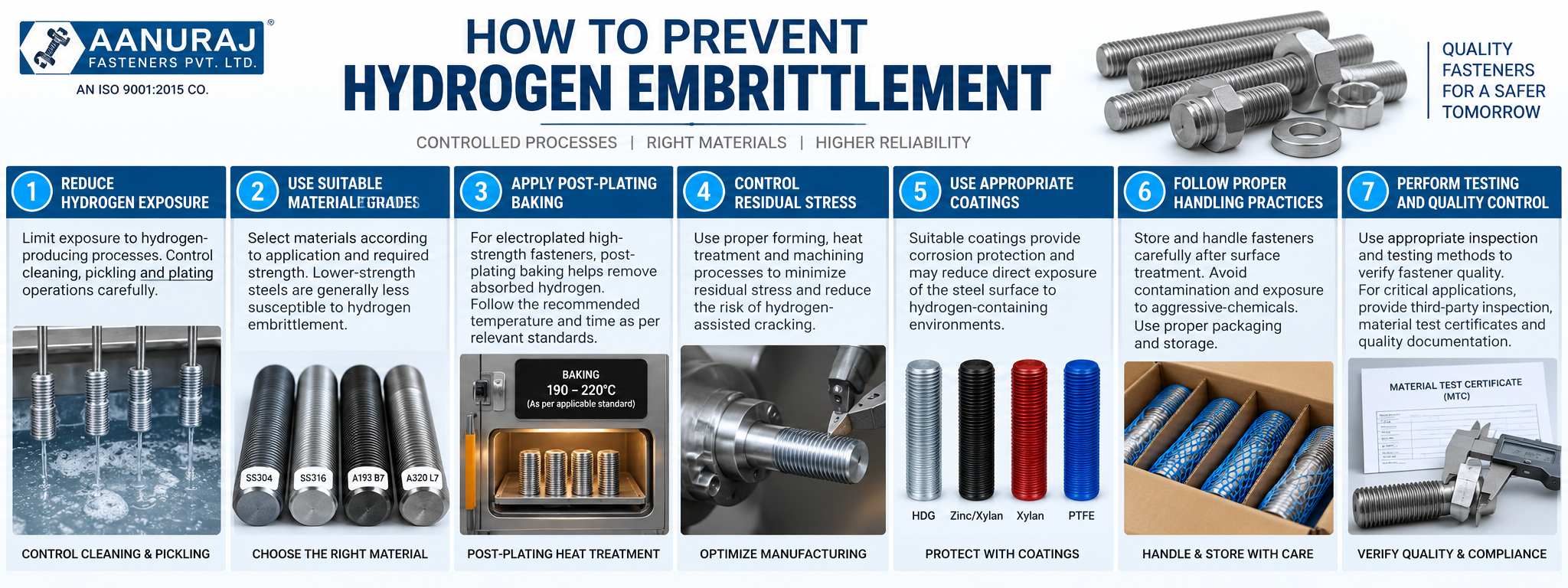
Manufacturers can reduce the risk through controlled processing and appropriate material selection.
Hydrogen Embrittlement in Metal Materials: Causes & Prevention
1. Reduce Hydrogen Exposure
Limit unnecessary exposure to hydrogen-producing processes. Control cleaning, pickling and plating operations carefully.
2. Use Suitable Material Grades
Select materials according to the application and required strength. Lower-strength steels generally have lower susceptibility than many high-strength steels.
However, material selection should always consider the complete service environment.
3. Apply Post-Plating Baking
For applicable electroplated high-strength steel fasteners, post-plating baking can help reduce absorbed hydrogen.
A commonly used practice involves baking soon after plating. The exact temperature and duration should follow the applicable standard, material grade and process specification.
4. Control Residual Stress
Good manufacturing practices can help reduce residual stress. Correct forming, heat treatment and machining processes can therefore reduce risk.
5. Use Appropriate Coatings
Suitable coatings can provide corrosion protection and may reduce direct exposure of the steel surface to the environment.
However, coating selection should match the fastener material and application requirements.
6. Follow Proper Handling Practices
Store and handle fasteners carefully after surface treatment. Avoid contamination and unnecessary exposure to aggressive chemicals.
Proper packaging and storage also help maintain surface quality.
7. Perform Testing and Quality Control
Quality control provides another important layer of protection. Manufacturers can use appropriate inspection and testing methods to verify fastener quality.
For critical applications, customers may also request third-party inspection, material test certificates and quality documentation.
Why Hydrogen Embrittlement Matters in Industrial Fasteners
Fasteners often operate under continuous mechanical stress. A small crack can become a serious problem when the fastener experiences high loads or vibration.
This is particularly important in industries such as:
- Oil and gas
- Petrochemical
- Power generation
- Construction
- Infrastructure
- Chemical processing
- Offshore and marine
- Heavy engineering
For these applications, engineers must consider material grade, strength, coating, manufacturing process and service environment together.
Hydrogen Embrittlement Prevention at Aanuraj Fasteners
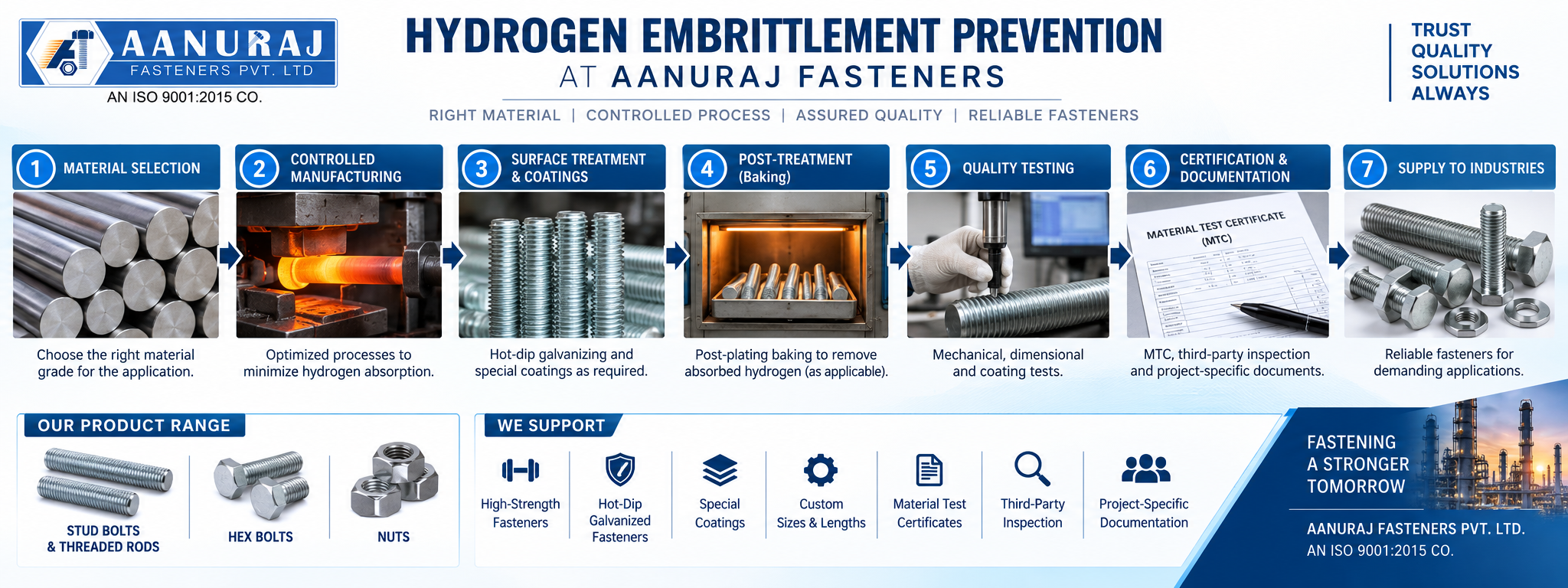
At Aanuraj Fasteners Pvt. Ltd., we understand the importance of material selection and controlled manufacturing for industrial fasteners.
We supply a wide range of stud bolts, threaded rods, hex bolts and nuts in stainless steel, alloy steel and other engineering materials.
For demanding applications, we can support requirements involving:
- High-strength fasteners
- Hot-dip galvanized fasteners
- Special coatings
- Custom sizes and lengths
- Material Test Certificates
- Third-party inspection
- Project-specific quality documentation
Our focus remains on quality, dimensional accuracy, material traceability and reliable fastener performance.
Conclusion
Hydrogen embrittlement can affect the reliability of metal fasteners, particularly high-strength steel components exposed to hydrogen-producing processes.
However, manufacturers can reduce the risk through proper material selection, process control, stress management and suitable post-treatment practices.
Therefore, understanding hydrogen embrittlement in metal materials is essential when selecting fasteners for critical industrial applications. Proper manufacturing and quality control help deliver safer and more reliable fastening solutions.
Related Keywords
Hydrogen embrittlement, hydrogen embrittlement prevention, galvanized fasteners, hot-dip galvanized bolts, galvanized stud bolts, high-strength fasteners, hydrogen-assisted cracking, electroplating, post-plating baking, metal materials, fastener quality control, industrial fasteners.


